
Home / Blogs
Government Makes Solar Panels Mandatory on All New Homes by 2027
Proximus Solutions
Free Consultation
We assess your home & energy usage
Proximus Solutions
Tailored Systems
Tailored to your goals and property
Proximus Solutions
Expert Installation
MCS Certified installation by our experts
Proximus Solutions
Start Saving
Lower bills and more energy independence
Proximus Solutions
Ongoing Support
We are here for you, Every steps of the way
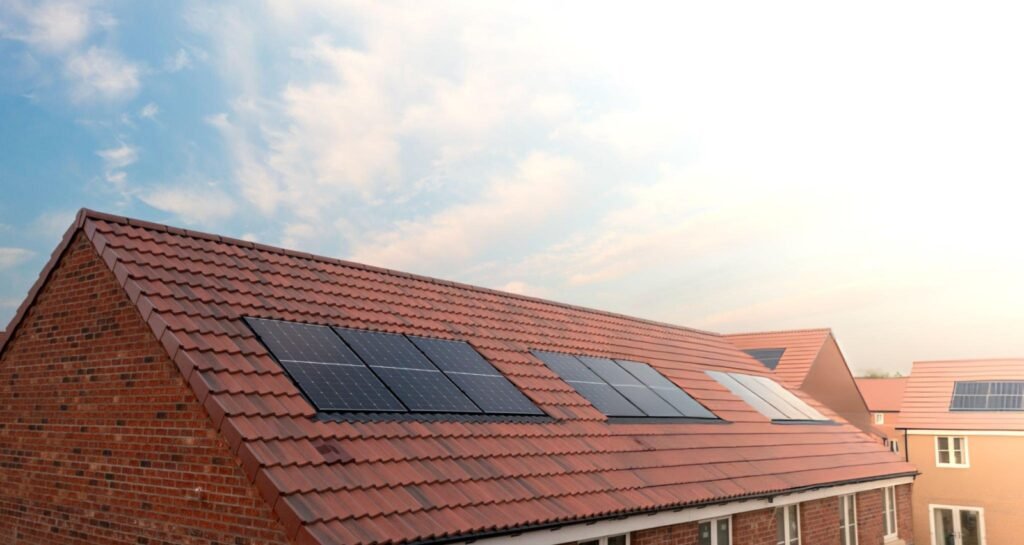
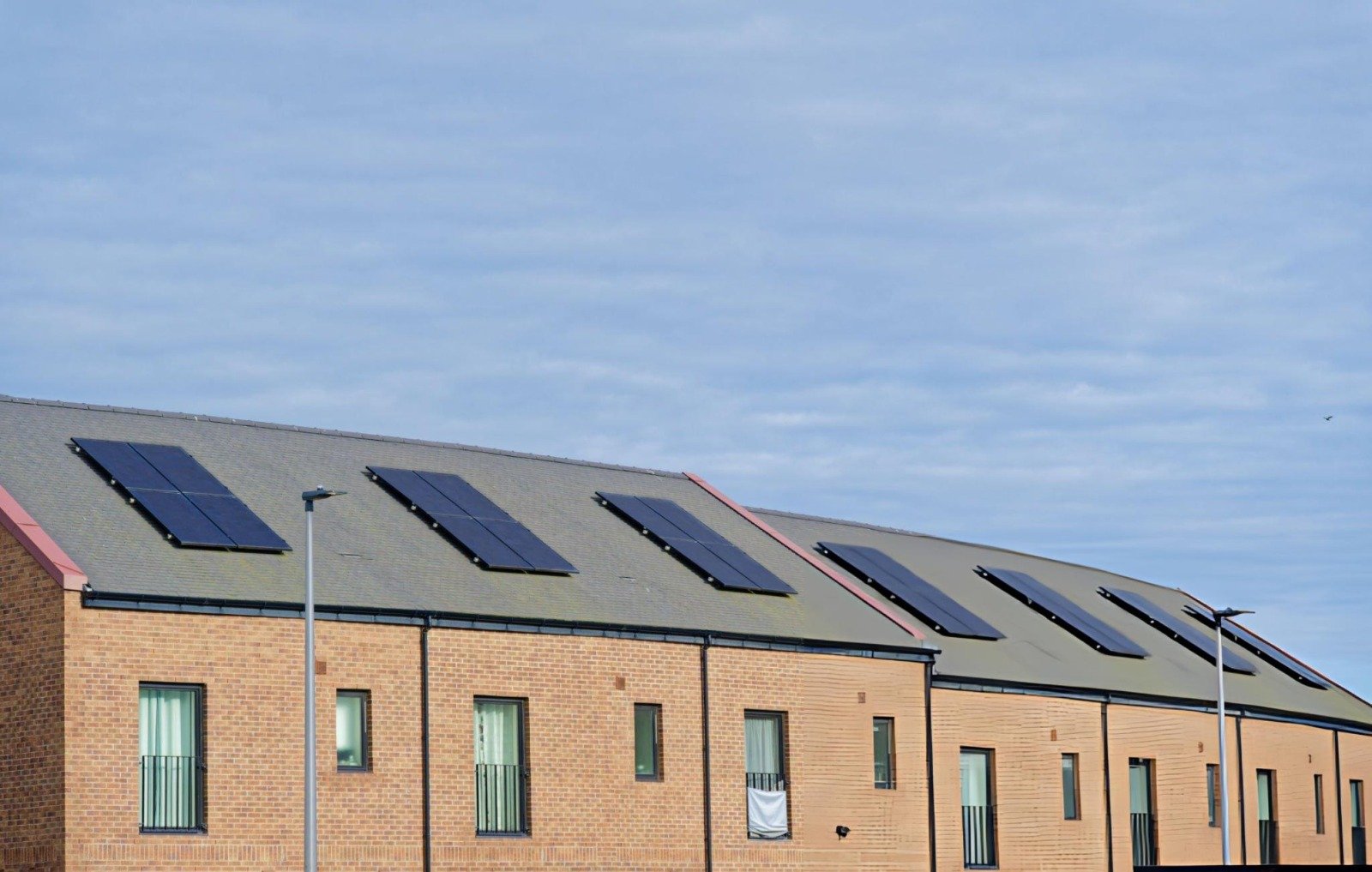
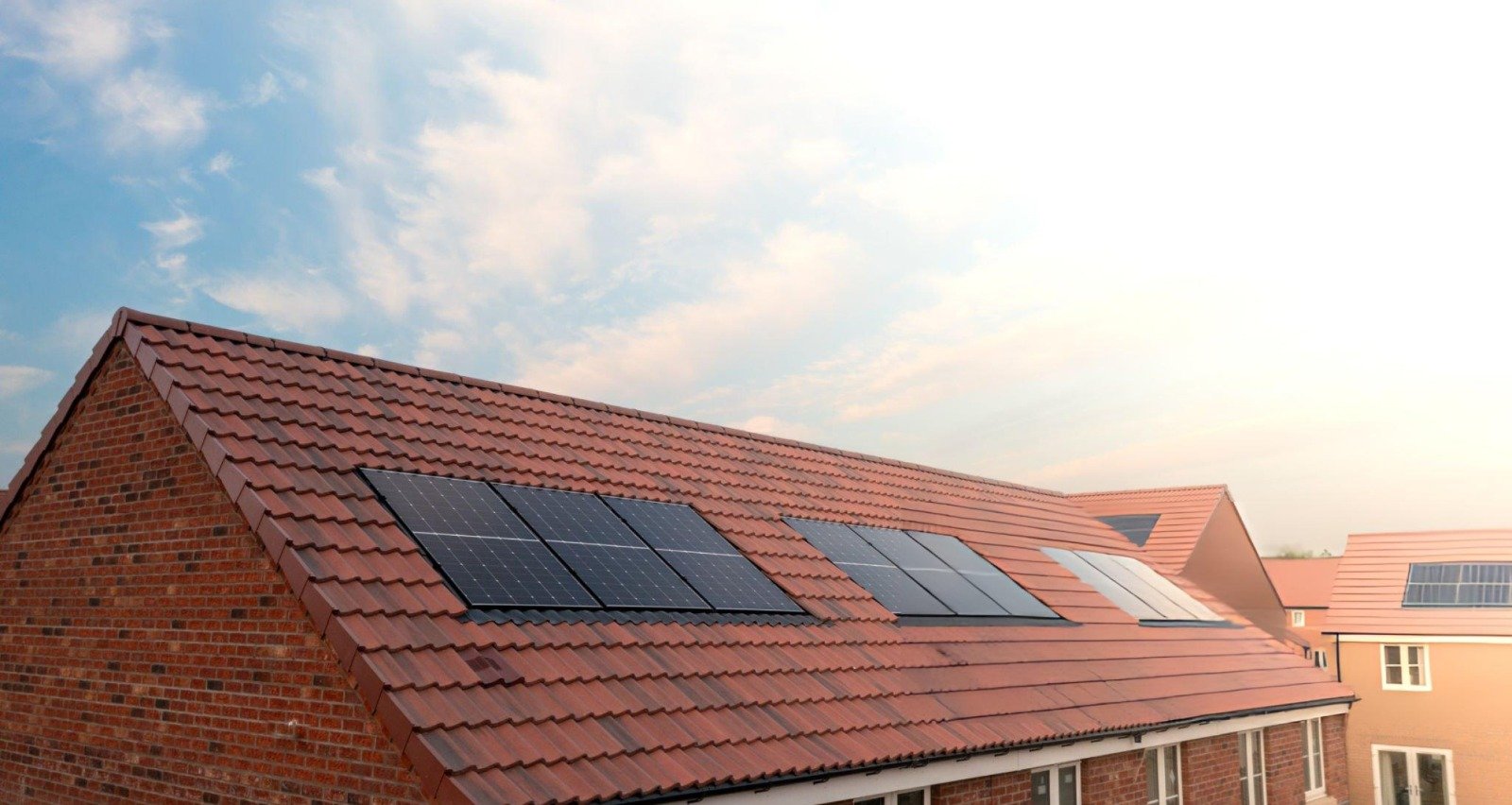
The UK is on the verge of one of the biggest changes to housing policy in a generation․ From 24 March 2027‚ the government will require that solar panels for home be installed on the huge majority of new homes across England․ This will have a drastic impact on the way homes are designed‚ built and powered for decades to come․
Whether you’re a potential homebuyer‚ a potential property developer or just someone interested in the UK’s clean energy future‚ here’s what you need to know about the 2027 solar mandate‚ what it means in practice‚ and why it matters․
What Is the 2027 Solar Mandate?
The 2027 solar mandate is part of the Future Homes Standard (FHS)‚ the UK government’s biggest reform of residential building standards in decades․ This was confirmed through changes to building regulations announced in March 2026‚ which came into force on 24 March 2027․ Under transitional arrangements‚ the main changes will have to be implemented by 24 March 2028․
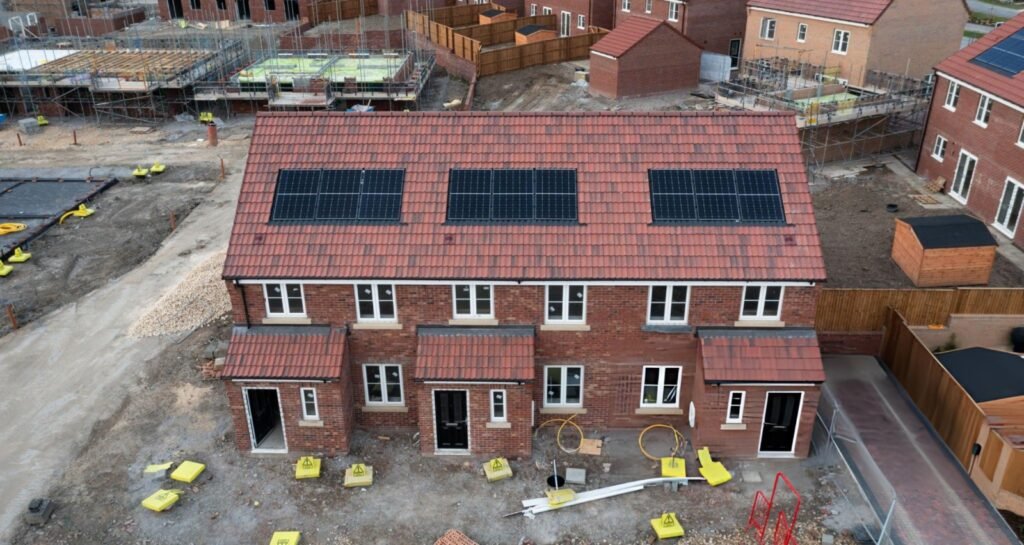
The policy states that under broad proposals outlined by the government‚ an on-site solar photovoltaic (PV) panels system will be required as standard in the majority of new homes in England․ The requirement will be for solar panels with a capacity equivalent to 40% of the ground floor space of an average new home‚ subject to some flexibility for design reasons․
In addition to the solar requirement‚ the FHS also requires the use of low carbon heating systems such as air source heat pumps rather than gas boilers to provide heating․ These measures are designed to ensure that on average new homes will emit at least 75% less carbon than homes built to 2013 standards․
Why Has the Government Introduced This Policy?
The solar mandate is part of the Labour government’s promises to provide near-full clean electricity generation by 2030‚ legally-binding net-zero by 2050‚ and 1․5 million new homes this Parliament․
This decision was motivated by several factors:
Lower energy bills: Homeowners with solar panels on their roofs may save around £530 a year on their energy bills (based on the energy price cap)․ The Local Government Association estimates household electricity bills for those with solar panels to be around £440 lower than older homes․
Solar shortfall in new homes: Last year‚ around 40% of newly built homes in England did not have rooftop solar․ Trade association Solar Energy UK puts the figure even higher — closer to 60% across the UK. The mandate directly addresses this gap.
Renewable energy targets: The previous government had set a target of 70GW national solar capacity by 2035․ Labour has pledged to triple solar deployment in the 2020s and rooftop solar on new homes is a simple method of achieving this․
Grid contribution: According to Good Energy‚ if the 1․5 million homes referred to were each fitted with a 4kW solar array‚ the surplus returned to the grid would power an additional 1․17 million homes․
When Does the Mandate Effect?
The Future Homes Standard regulations were confirmed in March 2026‚ and came into effect on 24 March 2027․ This means that any home for which a building notice is submitted in the UK after spring 2027 will have to comply with the Future Homes Standard regulations․
A transitional period runs until 24 March 2028, giving developers with schemes already in the planning pipeline time to work through those projects under the existing framework. After March 2028, there is no further delay — all new homes built in England must meet the Future Homes Standard in full.
Scope of the 2027 Solar Mandate: New Residential Builds in England
The mandate applies to new residential builds in England only. Wales and Scotland have separate building standards frameworks — Wales has its own clean energy regulations, and Scotland is pursuing a zero-emissions buildings approach.
For new builds, the rule is broad but not absolute. Here is what the compliance requirements look like in practice:
- The default requirement applies to the vast majority of new homes. Solar PV panels covering 40% of the dwelling’s ground floor area satisfy the standard.
- Where design constraints such as dormers, rooflights, or chimneys prevent full 40% coverage, a lower percentage is permitted — builders are not expected to alter a roof’s design purely to hit the coverage figure.
- The legal requirement is technically for renewable electricity generation, not specifically solar panels, though solar PV will be the default method on almost all new homes.
What About Existing Homeowners?
The 2027 mandate is specific to new builds and does not impose any obligation on existing homeowners. However, the policy shift has several indirect implications for the wider housing market:
- As demand for solar technology grows due to the new-build mandate, installation costs are likely to fall further, benefiting retrofit customers
- The growing price premium on solar-equipped homes may increase market pressure on existing homeowners to install panels voluntarily
- The government is separately developing grants and loan schemes to support solar adoption in the existing housing stock
- Tax incentives are already in place: standalone battery storage connected to the grid has qualified for zero-rate VAT since February 2024.
Are There Any Exemptions to the Mandatory Solar Panel Requirement for New Homes?
The government has built several explicit exemptions into the regulations:
Poor solar potential. If a property’s roof cannot generate at least 720 kWh per year from solar PV — due to heavy shading, proximity to tall trees, or very limited usable roof space — the mandatory requirement does not apply.
Tall buildings. Any residential building with a storey 18 metres or above is fully exempt. This primarily affects taller apartment blocks rather than standard houses or low-rise flats.
Alternative renewable sources. Where a development is connected to a shared low-carbon energy network that provides equivalent renewable electricity, the on-site panel requirement can be waived.
Approximately 1% of homes are expected to qualify for exemptions overall, meaning the solar requirement will effectively cover 99% of new build properties.
What Does This Mean for Homebuyers?
For anyone buying a newly built home from 2027 onwards, the practical benefit is clear: clean energy arrives with the keys. There is no need to arrange a separate installation, negotiate with a solar provider, or fund the upfront cost of a system yourself.
A typical new build with a 4kW solar array can expect:
- Savings of around £313 per year on electricity bills based on current price cap unit rates
- Export earnings of approximately £315 per year based on the current 15p export rate
- For a three-bedroom semi-detached home, panels should generate enough electricity to cover roughly half the household’s annual usage
For the average three-bedroom home, installed system costs range from approximately £3,000 to £4,000, which developers typically incorporate into the property price and mortgage arrangement — spreading the investment across the home’s lifetime rather than requiring a lump-sum payment.
Beyond the immediate bill savings, homes with solar panels are increasingly attracting property value premium. Studies suggest that solar-equipped homes can command 4–6% higher valuations compared to equivalent properties without renewable energy systems and tend to sell more quickly.
What Does This Mean for Property Developers and Housebuilders?
For developers, the 2027 mandate shifts solar from an optional feature — used by some to meet carbon targets or attract eco-conscious buyers — into a legal requirement that must be designed into new schemes from the outset.
Key practical considerations include:
Planning solar from day one. Solar orientation, roof pitch, and available surface area all affect system performance. The earlier solar is integrated into the design process, the more efficient and cost-effective the outcome.
System sizing. The government’s 40% ground floor coverage benchmark translates to roughly 3.4kWp for a typical three-bedroom home — enough to meet compliance, but not necessarily enough to future-proof the property. NHBC data has already flagged that most new build arrays installed under the previous voluntary regime were undersized, a pattern the Future Homes Standard is explicitly designed to correct.
Developers who specify systems in the 5–6kWp range from the outset are better placed to meet buyer expectations around EV charging and heat pump operation — and getting the specification right at design stage is far cheaper than remedial upgrades after handover.
Battery storage. While not mandated by the 2027 rules, solar panel battery is widely regarded as essential to maximizing a solar system’s value. Batteries allow homeowners to store excess generation and use it later, increasing self-sufficiency and reducing grid dependence. Including storage at the build stage is far more cost-effective than retrofitting later.
Cost implications. A typical new build solar system — panels, inverter, and basic equipment — costs between £4,500 and £8,500, depending on system size. Adding battery storage brings the total to between £7,000 and £13,500 for a 3–6kW system. These costs are significant but manageable within the broader economics of a new development, particularly given their positive effect on sales velocity and buyer appeal.
The Broader Picture: Heat Pumps and the Future Homes Standard
The solar mandate does not exist in isolation. The Future Homes Standard also bans gas boilers in new builds from 2027, requiring homes to use air source heat pumps or connect to low-carbon heat networks instead.
The UK currently lags behind much of Europe on heat pump adoption. Fewer than 100,000 units were sold last year, compared to 550,000 in France and 200,000 in Germany. If Labour meets its 1.5 million new homes target, the FHS is expected to drive heat pump installations to around 400,000 per year — potentially transforming the UK from one of Europe’s slowest adopters to one of its largest markets.
The combination of solar panels and heat pumps is designed to work synergistically: on sunny days, the solar system generates electricity that powers the heat pump, reducing the cost of heating while cutting carbon emissions.
Environmental Impact
The climate case for the 2027 mandate is compelling. The housing sector is a major source of UK carbon emissions, and new homes built to pre-FHS standards have historically locked in decades of fossil fuel dependence.
Under the Future Homes Standard:
- New homes will emit at least 75% less carbon than homes built to 2013 regulations
- Rooftop solar at scale will contribute meaningfully to the UK’s national clean energy targets
- The mandate reduces reliance on imported fossil fuels, strengthening the country’s energy security
Organizations including the Campaign to Protect Rural England (CPRE) have strongly backed the policy, arguing that rooftop solar makes the most efficient use of existing built land. CPRE chief executive Roger Mortlock has called for at least 60% of the UK’s solar energy to come from rooftop installations, positioning the mandate as an important step in striking the right balance between land use and clean energy generation.
Conclusion
The government’s decision to make solar panels mandatory on new homes by 2027 marks a genuine turning point for the UK housing sector. It ends the era of gas-powered new builds, establishes clean energy generation as a standard feature of every new home, and creates a platform for significant long-term savings for homeowners across England.
For prospective buyers, it means the next home you buy from a developer will come with solar as standard. For builders, it means designing solar into every scheme from day one — not as an optional extra, but as a core element of the build.
The transition is underway. The regulations are finalized. The deadline is set. And for anyone planning to build, buy, or invest in new homes in England, the 2027 solar mandate is the single most important policy change to understand right now.
Get a Free Solar Panel Price Quote from Proximus Solutions
Getting the right solar panel system starts with getting the right quote. At Proximus Solutions, every proposal is tailored to your property, your energy usage, and your budget — with a fixed price you can rely on and no hidden costs on installation day.
All installations are carried out by our MCS-certified engineers and include 0% VAT until March 2027.
📞 Call us: 0161 521 0099
✉ Email: info@proximussolutions.co.uk 🌐
Get a free quote: proximussolutions.co.uk/contact-us
Frequently Asked Questions
Are solar panels already required on new homes?
No. As of mid-2026, solar panels are not mandatory on new homes. The requirement takes effect on 24 March 2027 under the Future Homes Standard.
Does the mandate apply across the whole UK?
The Future Homes Standard applies to England only. Wales and Scotland have separate building standards.
What size solar system is required?
The government’s benchmark is panels covering 40% of each dwelling’s ground floor area. For a typical two or three-bedroom home, this equates to approximately 10 to 12 panels. A reduced coverage percentage is allowed where roof design constraints apply.
Will battery storage be mandatory?
Battery storage is not required under the 2027 mandate but is strongly recommended to maximize the value of any solar installation.
Can existing homes be forced to install solar panels?
No. The mandate applies only to new builds. Existing homeowners are under no obligation to retrofit solar panels.
What are the main exemptions?
Properties where the roof cannot generate at least 720 kWh per year from solar PV, and residential buildings with a storey at 18 metres or above, are exempt. Only around 1% of new homes are expected to qualify for an exemption.
How will the mandate affect house prices?
Installation costs of £3,000–£4,000 per home will typically be absorbed into the property price and financed through the mortgage. The long-term value benefit — energy savings, grid export earnings, and property value premium — is widely expected to outweigh the additional upfront cost.

How Much Do Solar Panels Save on Electricity Bills in the UK?
proximussolutions.uk
July 17, 2026
Read More »
How Much Do 10 Solar Panels Cost in the UK? (2026 Price Guide)
proximussolutions.uk
July 9, 2026
Read More »
Government makes Solar Panels Mandatory on New Homes by 2027
proximussolutions.uk
July 1, 2026
Read More »
Octopus Solar Panels Costs & Tariffs 2026: What UK Homeowners Need to Know
proximussolutions.uk
June 24, 2026
Read More »