
Home / Blogs
Complete Guide To Solar Panel Installation In The UK
Thinking about solar? Discover costs, savings, installation process and key tips to help UK homeowners make the right decision before going solar.
Proximus Solutions
Free Consultation
We assess your home & energy usage
Proximus Solutions
Tailored Systems
Tailored to your goals and property
Proximus Solutions
Expert Installation
MCS Certified installation by our experts
Proximus Solutions
Start Saving
Lower bills and more energy independence
Proximus Solutions
Ongoing Support
We are here for you, Every steps of the way
Introduction
Energy bills in the UK are not coming down any time soon. For homeowners looking for a long-term fix rather than a short-term workaround, solar panels remain one of the most proven and financially sound investments available. But between the technical language, competing installer claims and confusing product options, it is easy to feel uncertain about where to start.
This guide strips all of that back. We cover everything that actually matters, clearly and straightforward, so you can make a confident, well-informed decision. So, let’s get started.
What Are Solar Panels and How Do They Work?
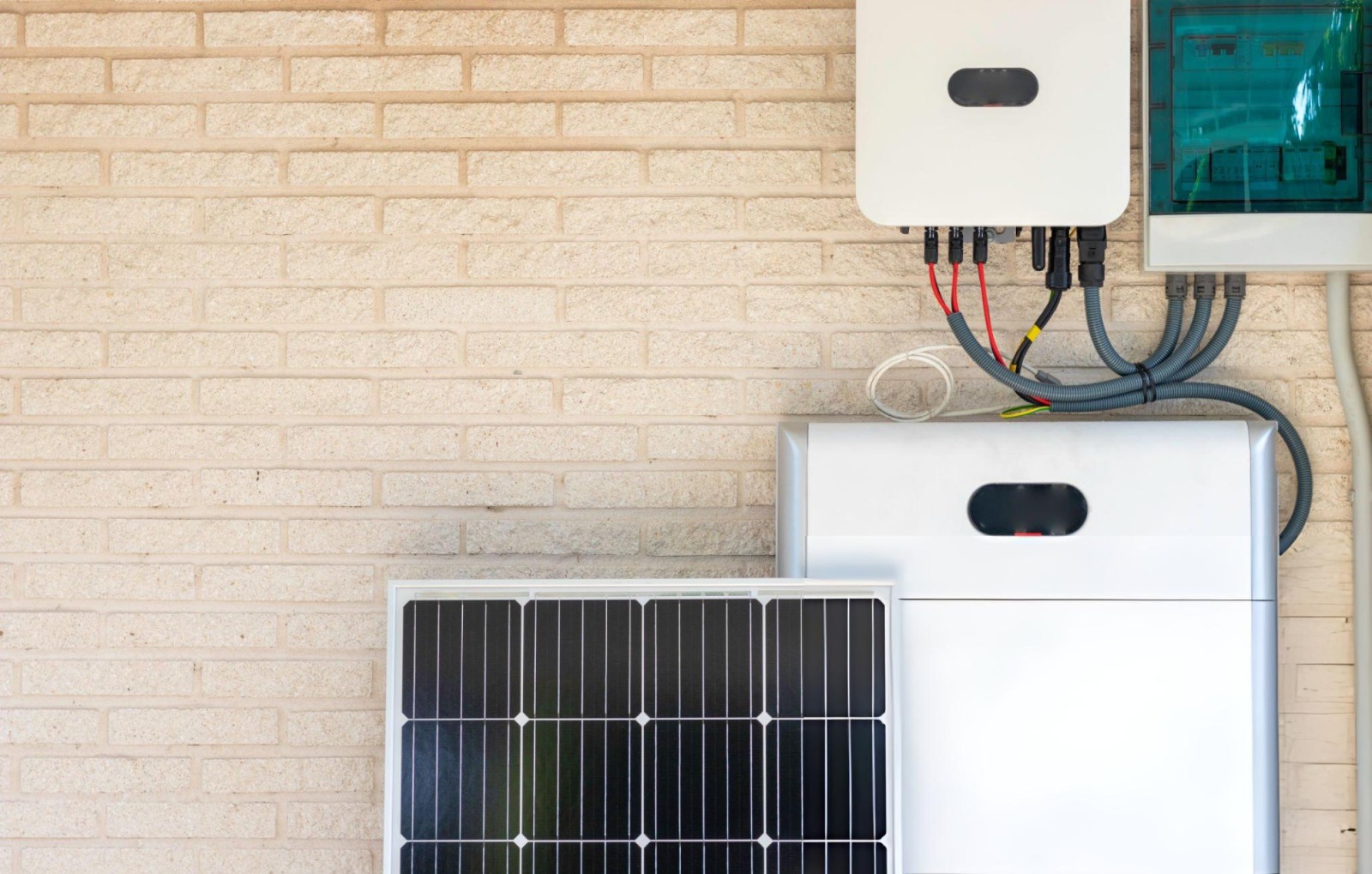
Solar panels convert daylight into usable electricity for your home. They are made up of photovoltaic (PV) cells, usually silicon-based, that generate a direct current (DC) charge when exposed to light. An inverter then converts that DC electricity into the alternating current (AC) that your household appliances run on.
The system works during daylight hours, not just in direct sunshine. Any electricity generated that you do not use immediately can either be stored in a battery for later use or exported back to the national grid in exchange for payment.
Modern solar technology has improved significantly. Panels today generate roughly 40% more electricity from the same roof space compared to systems installed ten years ago, and they perform reliably in the kind of overcast, diffused light that is typical of the UK climate.
Types of Solar Panels Available In UK
There are three main panel types on the market. For most UK homeowners, the choice comes down to monocrystalline versus polycrystalline.
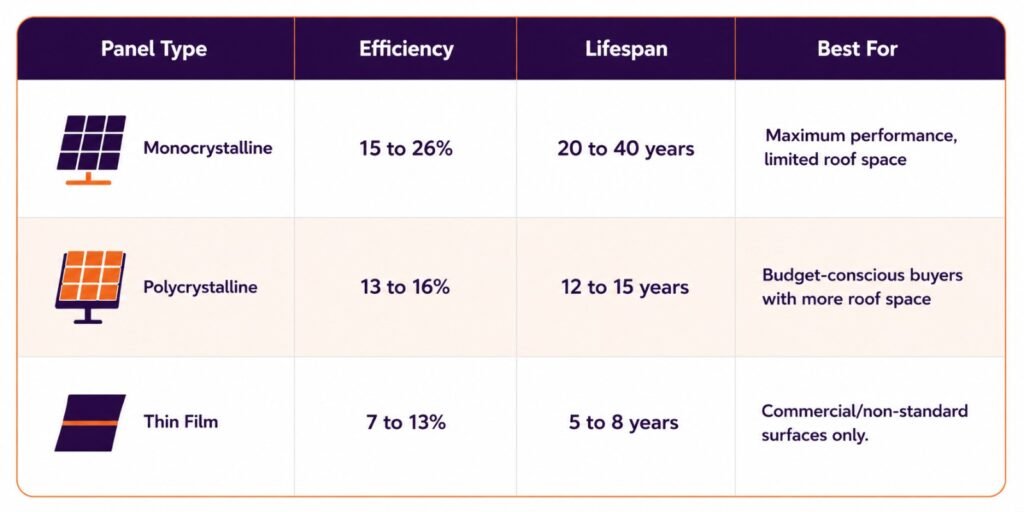
For the vast majority of UK homes, monocrystalline panels are the right choice. They are more efficient, more durable and deliver a stronger long-term return on investment, particularly when roof space is limited.
Proximus Solutions installs high-performance monocrystalline panels with N-Type heterojunction cell technology, designed specifically to maintain strong output in the low-light conditions common across the UK.
Solar Panels Installation Cost & Savings
The total cost of a solar installation depends on system size, panel quality, whether battery storage is included, and the complexity of your roof. Here are best Solar Packages by Proximus Solutions for you:
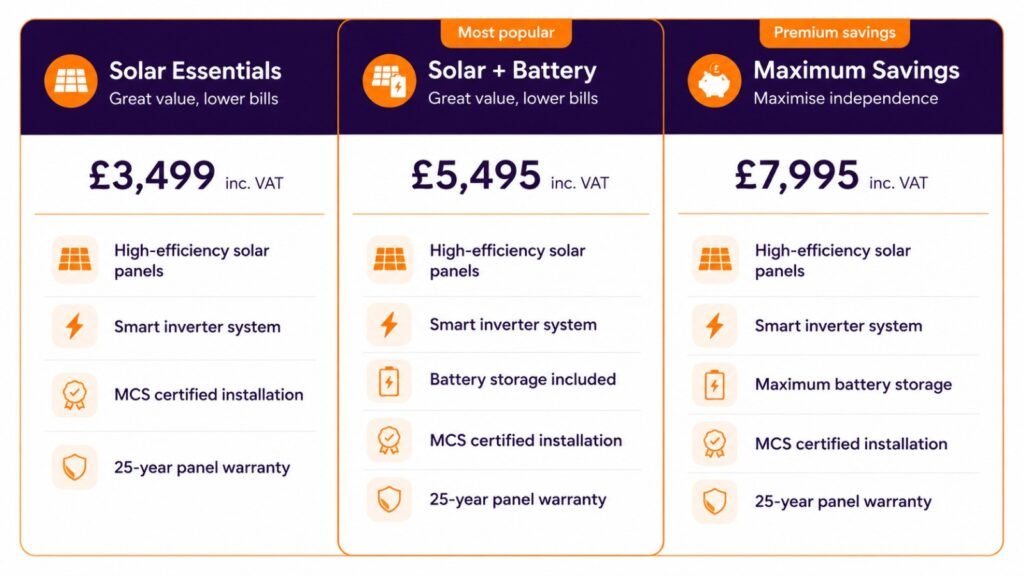
These figures include panels, inverter, mounting hardware, labour and all associated electrical work. Scaffolding is an additional cost that varies depending on your property and is always confirmed upfront by Proximus Solutions before you commit to anything.
Higher-quality panels cost more upfront but deliver better performance and longer warranty coverage. Cutting costs on equipment at the point of installation often means cutting into long-term savings.
How Much Can You Save?
Your actual savings depend on your energy usage, system size, roof orientation and whether you have battery storage. That said, real-world figures give a useful benchmark:
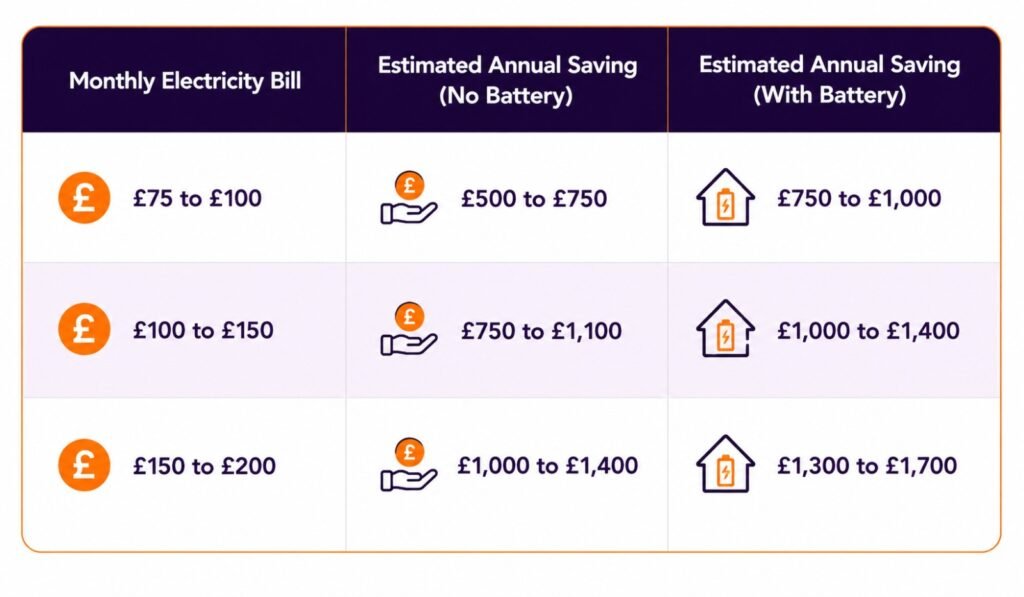
Battery storage makes a meaningful difference because it captures electricity generated during the day for use in the evening, when households typically consume the most power. Without a battery, much of that daytime generation gets exported to the grid at a lower rate than you would pay to import it.
On the question of payback: A well-sized system typically pays for itself within 7 to 10 years. With panels warranted for 25 years, that leaves well over a decade of near-free electricity generation after the break-even point.
Selling Electricity Back To the Grid
Any electricity your system generates that you do not use or store can be exported to the national grid. The Smart Export Guarantee (SEG) requires licensed energy suppliers to pay you for every unit you export.
Export rates vary by supplier and tariff, so it is worth comparing options before you commit to one provider. To be eligible for SEG payments, your installation must be carried out by an MCS-certified installer. All Proximus Solutions installations meet this requirement as standard.
The practical advice is to prioritise self-consumption first. Use your battery to maximise the electricity you use at home before thinking about export. Every unit you use yourself saves you more than the same unit exported.
How Long Does the Installation Process Take?
A standard residential solar installation by Proximus Solutions, including panels, inverter and battery where applicable, is typically completed within one to two days. The process breaks down as follows:
- Day one: scaffolding erection and panel installation.
- Day one or two: inverter and battery installation, wiring and electrical connections.
- Final stage: system commissioning, performance testing and MCS registration.
Scaffolding is usually removed within two to three days of installation completion. Most customers are generating electricity within 48 hours of the installation team arriving.
Proximus Solutions aims to have customers installed within 1–4 weeks of confirming their order, with the exact timeline confirmed at the point of booking.
Is Your Roof Suitable for Solar Panels?
Most UK roofs are suitable for solar. The factors that genuinely affect suitability and output are:
- Orientation: South-facing roofs deliver the highest annual yield. East and west-facing roofs still perform well, particularly with modern microinverter systems where each panel operates independently.
- Pitch: A roof angle of 30 to 40 degrees is optimal. Shallower or steeper pitches reduce output but rarely make a system unviable.
- Shading: Trees, chimney stacks or nearby buildings casting shadow on your roof will reduce output. A proper site survey identifies shading issues and accounts for them in the system design.
- Condition: Solar installations are designed to last 25 years. If your roof covering is near the end of its useful life, it makes sense to address that before installation.
Proximus Solutions carries out a full roof and property assessment as part of the quoting process. If your roof has a specific challenge, we will tell you upfront rather than discover it on installation day.
Do You Need Planning Permission?
In the vast majority of cases, no. Solar panel installations on residential properties in England and Wales fall under permitted development rights, which means no planning application is required.
The main exceptions are:
- Listed buildings, where any external alterations require consent.
- Properties within designated conservation areas, which may have specific restrictions.
- Flats or apartments, where freeholder or management company consent may be required.
If any of these apply to your property, Proximus Solutions will identify this during the assessment process and advise you on the appropriate steps before any work begins.
Why Choose Proximus Solutions for Solar Panel Installation?
The quality of your installer determines the quality of your investment. A poorly installed system will underperform regardless of the equipment used. Here is what to look for:
- MCS certification: This is the industry standard for solar installations in the UK and a requirement for Smart Export Guarantee eligibility. Do not proceed with an installer who cannot demonstrate current MCS certification.
- TrustMark registration: An additional layer of consumer protection that requires installers to meet defined standards of workmanship and conduct.
- Transparent pricing: Reputable installers provide itemised, fixed quotes before work begins. Be cautious of vague estimates that expand significantly on the day.
- Warranty clarity: Confirm what is covered, for how long, and by whom. Panel warranties, inverter warranties and workmanship warranties are three separate things.
- Aftercare: Find out what happens if something is not right after installation. A quality installer has a clear process for post-installation support.
Proximus Solutions holds MCS certification, TrustMark registration and a full suite of industry accreditations. Every installation is carried out by qualified engineers and backed by a 25-year panel and performance warranty.
Ready to Take the Next Step?
If you are considering solar panels for your home, Proximus Solutions offers MCS-certified installations with transparent fixed pricing, a 25-year product and performance warranty, and a team that will give you straightforward advice rather than a sales pitch.
Get in touch with Proximus Solutions today for a free, no-obligation assessment.
Frequently Asked Questions
Do solar panels work in winter?
Yes. Solar panels generate electricity from daylight, not heat or direct sunshine. Output is lower in winter due to shorter days and lower sun angles, but a well-sized system with battery storage continues to make a meaningful contribution to your energy needs throughout the year.
What happens during a power cut?
Standard grid-tied systems shut down automatically during a power cut for safety reasons. If backup power during outages is important to you, certain battery systems such as the Tesla Powerwall offer whole-home backup functionality. This is worth discussing at the quoting stage.
How long do solar panels last?
Quality monocrystalline panels are typically warranted for 25 years, covering both the product and its performance output. In practice, well-maintained panels often continue generating beyond this period, though output gradually reduces over time.
Will solar panels increase my property value?
Evidence suggests yes. Properties with solar installations are increasingly attractive to buyers given the ongoing energy savings they provide. An improved EPC rating, which solar typically delivers, is also becoming a more significant factor in property valuations.
Can I add battery storage to an existing system?
In many cases, yes. Compatibility depends on the inverter type already installed. Proximus Solutions can assess your existing system and advise whether retrofit battery storage is viable without replacing other components.
Solar Battery Storage In The UK: Is It Worth Your Money?
proximussolutions.uk
May 28, 2026
Read More »
Ready to Reduce Your Energy Bills?
Speak to our specialist team today for a free, no-obligation assessment.